I. Three Pitfalls I’ve Encountered
Pitfall 1: Low-price bait-and-switch that turns into “instalment pricing” after use.
Some platforms advertise “starting from X amount” on their homepage. Once you click in, you find it is only a limited-time first-month rate or applies only to the most unpopular number ranges. Monthly rent for commonly used numbers can be several times the advertised price.
Pitfall 2: Claiming “100% capable of receiving verification codes”.
This is the biggest trap. In reality, whether a verification code from a certain platform can be received depends on whether that platform permits virtual numbers. Any promotion claiming a 100% success rate is untrustworthy. Banks and social platforms including WhatsApp, Telegram and Google have strict risk control, while e-commerce, logistics and marketing platforms generally offer better support. You can only confirm usability through your own testing.
Pitfall 3: Immediate number recycling upon overdue payment with no prior alerts.
I once forgot to renew my subscription, and my number was reclaimed a few days later. All bound notifications stopped working. Since then, I only pick services with balance alerts and auto-renewal support.
II. Four Selection Criteria
After these bad experiences, I narrowed down my requirements to four rules:
- Transparent pricing: Separate rates for monthly rent, SMS and calls; renewal price equals the initial purchase price.
- No overhyped marketing: Platforms that clearly state “verification code reception is not guaranteed” are actually more reliable.
- Fast activation: Online registration, in-app number selection and instant service activation.
- Alert system: Notifications sent before balance runs out or the subscription expires.
III. Why I Settled on IntBell
I tested IntBell against these four standards, and several features stood out:
- Simple workflow: Register on the official website → filter countries in the number store → place an order to activate. The whole process is online, and you get your number within minutes.
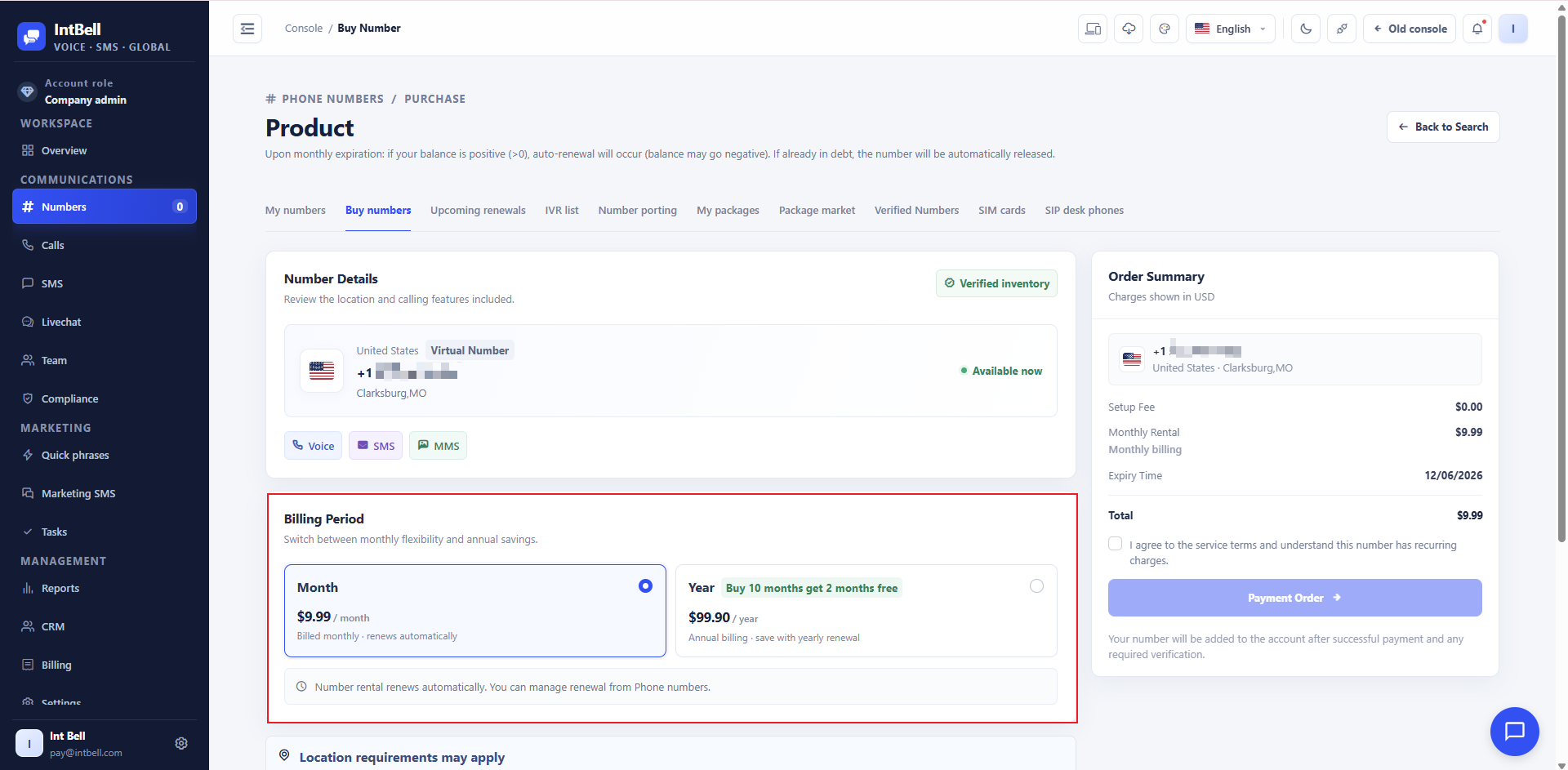
- Clear pricing: Take the US +1 number I bought as an example. The checkout page shows fixed rates: $9.99 monthly or $99.90 annually, with no hidden fees.
- Practical SMS feature: It reliably receives SMS sent from UK and other international numbers. Cross-border outbound SMS is not recommended, as delivery success cannot be guaranteed.
- Chinese interface: User-friendly for users based in China, with prompt customer support.
To be objective, it is not an “all-purpose number”. For registration on platforms with stringent risk controls, you still need to check if virtual numbers are accepted beforehand. Still, for routine overseas communication and SMS reception, it is the most hassle-free service I have used.
IV. Three Tips for New Users
- Clarify your use case before purchasing: Number requirements differ greatly for verification code reception, calling and inbound SMS.
- Start with a one-month plan: Do not jump straight to an annual subscription. Renew only after you verify it meets your needs.
- Keep a backup for critical use cases: Do not bind important business services to a single number.
Closing Remarks
Virtual numbers are a handy tool, but picking the wrong provider may make you question the tool itself. Set clear criteria and ignore exaggerated marketing claims before buying, and you will largely avoid major pitfalls. If you want to give it a try, IntBell offers monthly plans with low trial risk — that is why I confidently recommend it.